

Why Polestar Pilates?
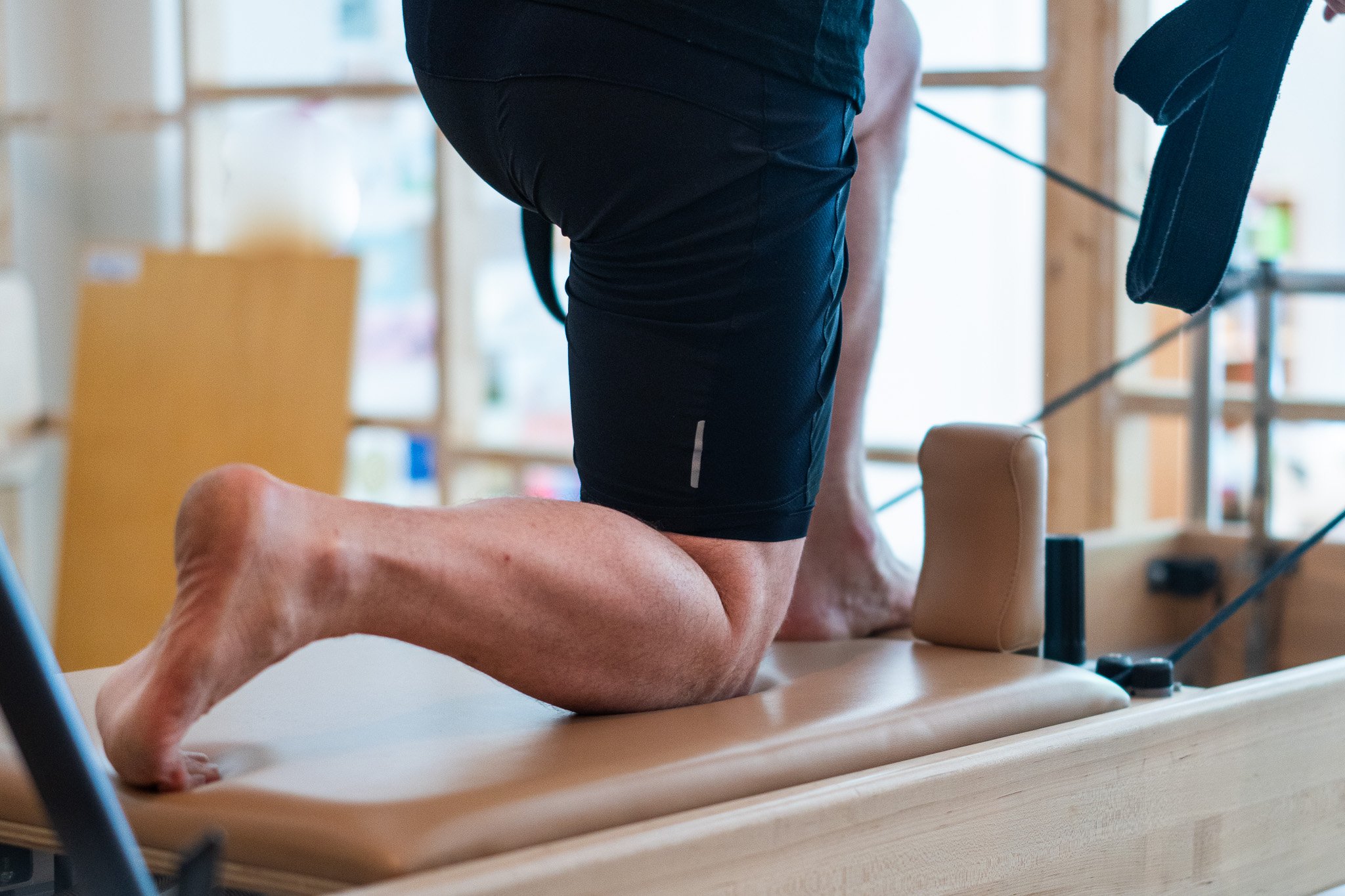
Inside the Transition Programme
You’re already a certified Pilates instructor. So why would you go back to school for a bridging course? Here’s the honest answer — starting with where Polestar actually comes from.
Who is Dr. Brent Anderson, and why does it matter who founded Polestar?
Polestar Pilates was founded in 1992 by Dr. Brent Anderson, a physical therapist who trained directly under several first- and second-generation Pilates teachers — including Romana Kryzanowska, Eve Gentry, Carola Trier, and Ron Fletcher — while working alongside physical therapy patients in San Francisco and Sacramento. That combination matters: Brent didn’t come to Pilates as a fitness discipline first. He came to it as a clinician, trying to understand why certain movements helped people recover, move better, and feel more at home in their own bodies.
He went on to complete a PhD in physical therapy and movement science, with doctoral research into how Pilates-based rehabilitation affects chronic low back pain, not just physically, but psycho-emotionally too. That’s the thread running through everything Polestar teaches: movement isn’t just mechanical. It’s biomechanical, neurological, and personal, all at once.
What actually makes Polestar’s philosophy different from other Pilates methods?
Most Pilates certifications teach you repertoire: the exercises, the order, the corrections. Polestar starts one level deeper, it teaches you the reasoning behind the repertoire, so you can adapt it to the person in front of you rather than teaching the same sequence to everyone.
This shows up in three concrete ways in the curriculum:
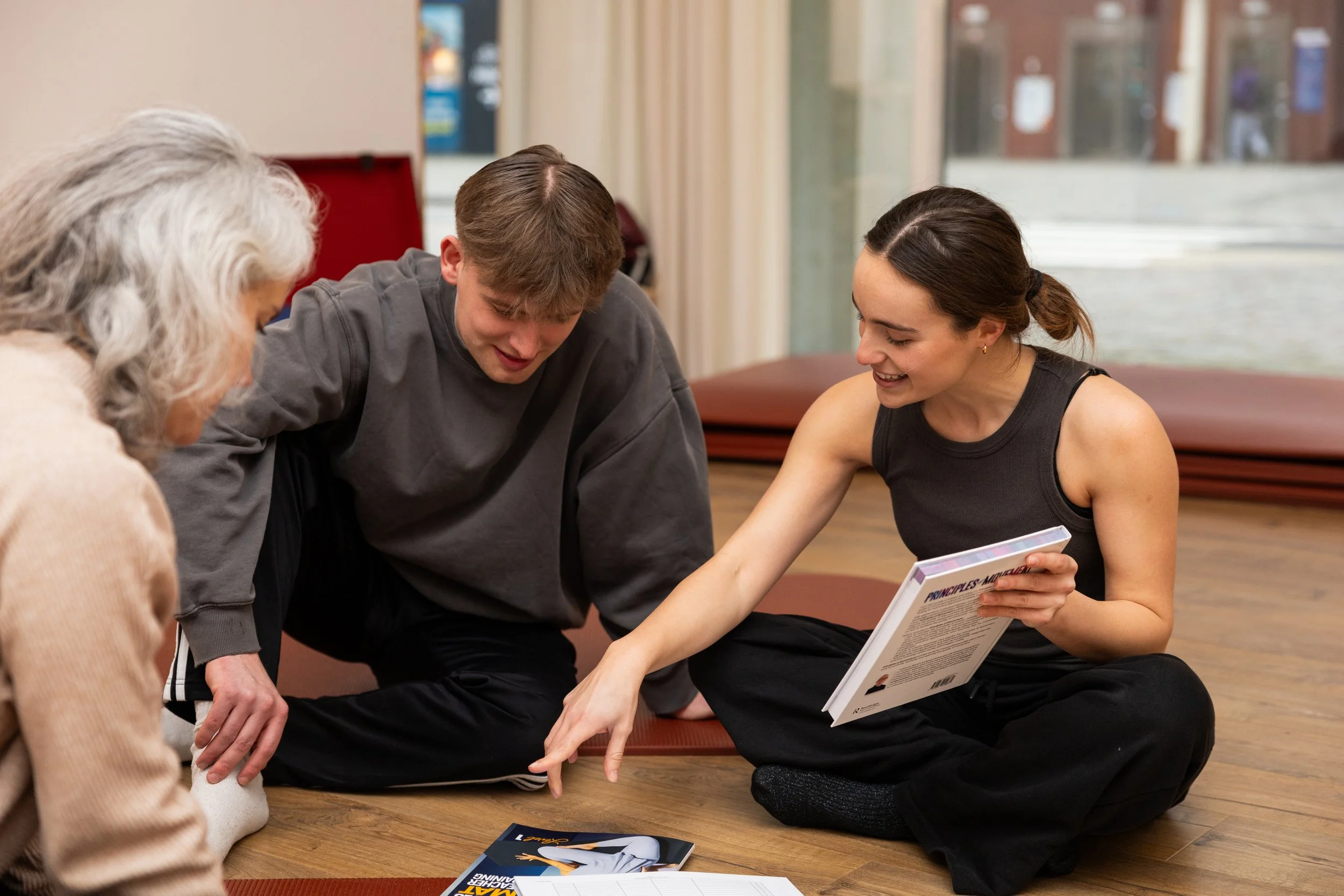
The Principles of Movement (POM) — five principles (Breathing, Mobility, Alignment, Control, Movement Integration) that give you a shared language for why an exercise is working, or isn’t, for a specific client
The Polestar Assessment Tool (PAT) — a structured, ICF-informed assessment framework that turns “this client has back pain” into a specific, individualised programme design, rather than a generic class.
Critical reasoning over choreography — instructors are taught to ask what a client needs and why, then build toward it, rather than memorising one fixed sequence and applying it universally.
What does the evidence actually say about Pilates?
Worth being precise: POM and PAT are Polestar’s own frameworks and haven’t been independently tested as branded tools. What follows is evidence for Pilates as a method more broadly, the foundation Polestar’s teaching sits within, not a validation of POM or PAT themselves.
The strongest evidence sits behind low back pain, but precision matters here. A landmark Cochrane review (Hayden et al., 2021a) found exercise overall — Pilates included — is moderately more effective than no treatment, but only marginally better than other conservative treatments. Whether Pilates specifically beats other exercise types is less settled: a companion network meta-analysis (Hayden et al., 2021b) placed it in the top tier alongside McKenzie therapy and functional restoration, but by a small margin, while a broader review of reviews (Grooten et al., 2022) found no major difference between exercise types at all. Being active clearly beats being inactive; Pilates outperforming other well-designed exercise remains a contested claim, not a settled one.
Pilates for balance and fall prevention in older adults is well-supported (Sampaio et al., 2023), as is Pilates for pregnancy and postpartum care, with recent reviews pointing to benefits for pelvic floor function, labour outcomes, and mood (Turan Alagöz et al., 2025).
It’s just as important to be upfront about where the evidence doesn’t hold up as where it shines — not every claim made about Pilates stands up equally well, and a good instructor should know the difference. The evidence for Pilates improving bone density is weak (Fernández-Rodríguez et al., 2021) — worth knowing if instructors are teaching bone-health classes — and Pilates for mental health shows promising but heterogeneous outcomes (Tsartsapakis et al., 2026). Two areas to watch: a 420-person trial found early promise for Pilates in hypermobility and hEDS (Russek et al., 2026), and a 24-week RCT found Pilates improved sustained attention in adults with ADHD (Kouhbanani et al., 2023).
This is exactly the kind of nuance the Transition Programme trains instructors to embody, not “Pilates fixes X,” but a genuinely critical read of what the evidence supports, for which population, and why. It also means holding evidence and the individual client alongside each other, not one instead of the other. A study tells you what happened, on average, for a group of people who aren’t the person on your reformer — real understanding comes from combining that population-level evidence with the clinical picture in front of you: this client’s history, their body, their goals, their lived experience. That’s the client-centred approach at the heart of it — looking at things from all angles, rather than reducing a person to what a study found for people broadly like them.
So why would an already-certified instructor need the Transition Programme?
Because most comprehensive Pilates certifications — however good — teach instructors to execute a method. Polestar’s Transition Programme teaches instructors to think like Polestar, using the training they already have as the foundation rather than starting over.
Instructors who already teach confidently on the reformer, chair, barrel and mat don’t need to relearn footwork or hundreds. What the programme adds is the layer underneath it: sharper clinical reasoning, a genuine assessment framework, and the confidence to adapt a session in real time because they understand what’s actually happening in someone’s body, not just the shape of the movement.
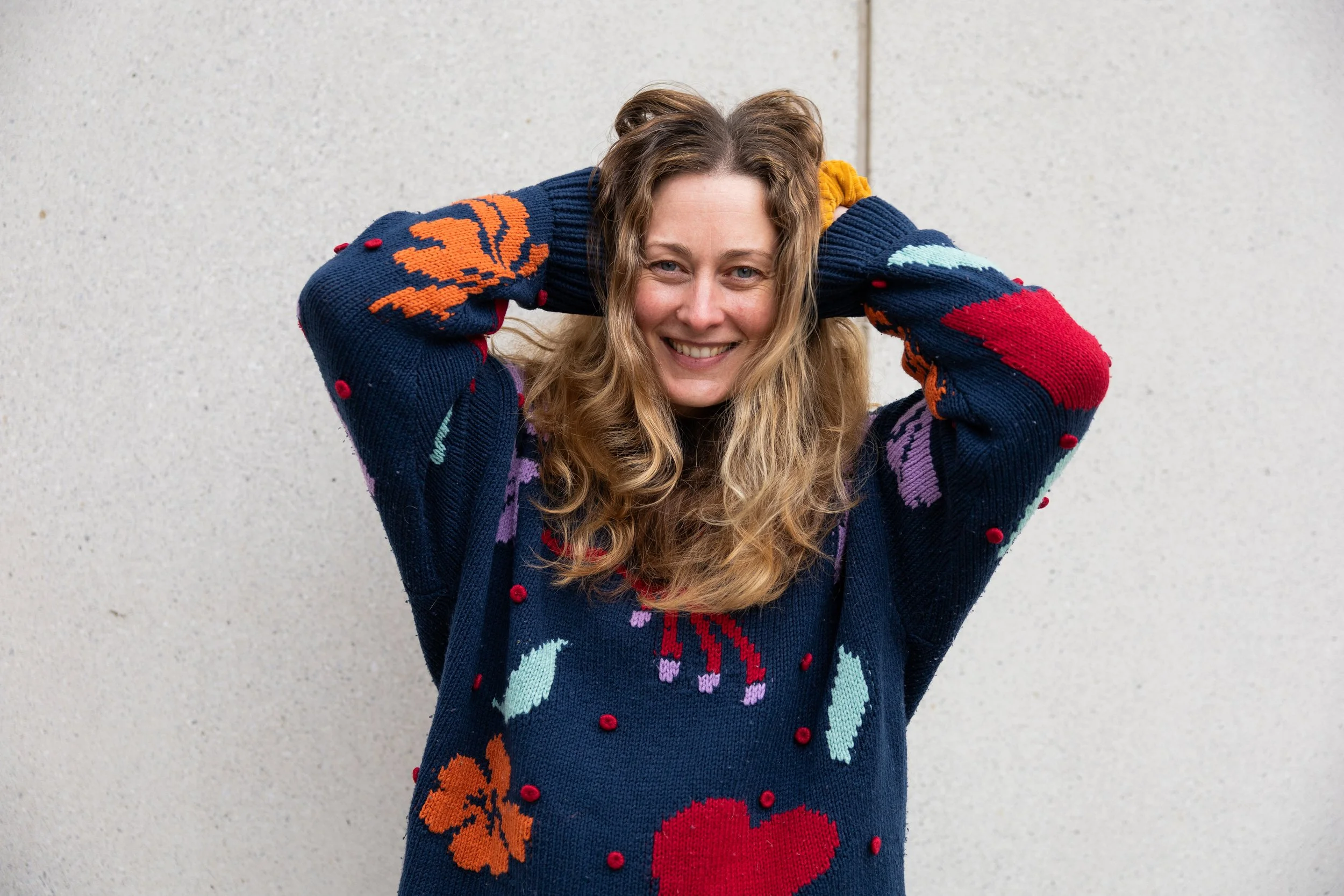
Who will teach the Transition Programme in Benelux?
The Benelux Transition Programme is led by Katina McCulloch, Senior Polestar Educator and Course Director of Polestar Pilates Benelux.
A note from Katina, in her own words:
My own path into this work started early. I began Pilates at 14, dealing with a complex history of pain and sports injuries, at a fully-equipped clinical studio in Australia — and I never really left. At 17, I started working as a secretary at a physiotherapist-led gym and Pilates practice, deliberately choosing that role just to be around it all and absorb as much as I could. It was through Polestar Pilates Australia, separately, that I met the educators who shaped my early thinking — Dav Cohen, Cat Giannitto, and Kimberly Garlick — alongside the broader physiotherapy and exercise physiology practice I was immersed in early on. I went on to complete a Master’s degree in Sydney, followed by a second Master’s at KU Leuven, before starting a PhD there and publishing several peer-reviewed research articles as part of that work. At a certain point, though, I realised that entrepreneurship and hands-on clinical practice were where I genuinely wanted to be — so I stepped away from academia to co-found Waves Leuven together with my business partner, Bavo Wouters.
As an Accredited Exercise Physiologist and Pilates Professional, I specialise in chronic pain and complex social situations, women’s health, and professional movers — athletes, dancers, musicians, Pilates instructors and the like. I teach the Comprehensive Course across Benelux and abroad, developed the Bumps, Babies & Boobs course (taught both in Benelux and in Dubai), and take on various other education gigs on the exercise physiology side of things too.
Because the Transition Programme group is kept deliberately small, this isn’t a large lecture-style intensive — it’s a genuinely close learning environment where each instructor’s specific background actively shapes the conversation, taught by Katina herself, whose own career has been built on asking exactly the kind of underlying questions this programme is designed around.
Can instructors get a feel for the Polestar approach before committing?
Yes — and Polestar training isn’t a prerequisite to do it. Brent Anderson hosts Pilates Hour, a free weekly webinar covering a wide range of movement and Pilates topics with guest experts from around the world. It’s open to anyone, regardless of training background, and it’s one of the easiest ways to get a direct sense of how Brent and the wider Polestar faculty actually think through movement, before committing to a full programme.
Upcoming sessions can be found via Pilates Hour with Brent Anderson on the Polestar Pilates Benelux site.
The practical bit, briefly
The next edition, Transition Programme Spring 2027, runs across two teaching weeks in Leuven:
Week 1 (Modules 1–3): 27–31 January
Week 2 (Modules 4–6): 10–14 March
This runs as an application-based system rather than an instant sign-up: applicants apply via the form, and a short call with Katina follows to confirm it’s genuinely the right fit before a spot is secured
Full details on structure, content, and what each week actually covers are in the programme syllabus — this blog is really about the why. For the practical specifics now, apply here, or book a Discovery Call to talk it through first.
References
Fernández-Rodríguez, R., Álvarez-Bueno, C., Reina-Gutiérrez, S., Torres-Costoso, A., Núñez de Arenas-Arroyo, S., & Martínez-Vizcaíno, V. (2021). Effectiveness of Pilates and yoga to improve bone density in adult women: A systematic review and meta-analysis. PLOS ONE, 16(5), e0251391. https://doi.org/10.1371/journal.pone.0251391
Grooten, W. J. A., Boström, C., Dedering, Å., Halvorsen, M., Kuster, R. P., Nilsson-Wikmar, L., Olsson, C. B., Rovner, G., Tseli, E., & Rasmussen-Barr, E. (2022). Summarizing the effects of different exercise types in chronic low back pain – a systematic review of systematic reviews. BMC Musculoskeletal Disorders, 23, 801. https://doi.org/10.1186/s12891-022-05722-x
Hayden, J. A., Ellis, J., Ogilvie, R., Malmivaara, A., & van Tulder, M. W. (2021a). Exercise therapy for chronic low back pain. Cochrane Database of Systematic Reviews, 2021(9), CD009790. https://doi.org/10.1002/14651858.CD009790.pub2
Hayden, J. A., Ellis, J., Ogilvie, R., Stewart, S. A., Bagg, M. K., Stanojevic, S., Yamato, T. P., & Saragiotto, B. T. (2021b). Some types of exercise are more effective than others in people with chronic low back pain: A network meta-analysis. Journal of Physiotherapy, 67(4), 252–262. https://doi.org/10.1016/j.jphys.2021.09.004
Kouhbanani, S. S., Zarenezhad, S., & Arabi, S. M. (2023). Mind-body exercise affects attention switching and sustained attention in female adults with Attention Deficit/Hyperactivity Disorder: A randomized, controlled trial with 6-month follow-up. Current Psychology, 42(24), 20983–20994. https://doi.org/10.1007/s12144-022-03216-6
Russek, L. N., Di Bon, J., Herbland, A., Vivlamore Zion Higgins, C., Jandrew, T. R., Adams, A. M., & Simmonds, J. (2026). An online Pilates program for people with hypermobility: A pragmatic clinical trial looking at function, interoception, kinesiophobia, and physical activity levels. Journal of Multidisciplinary Healthcare, 19, 564972. https://doi.org/10.2147/JMDH.S564972
Sampaio, T., Encarnação, S., Santos, O., Narciso, D., Oliveira, J. P., Teixeira, J. E., Forte, P., Morais, J. E., Vasques, C., & Monteiro, A. M. (2023). The effectiveness of Pilates training interventions on older adults’ balance: A systematic review and meta-analysis of randomized controlled trials. Healthcare, 11(23), 3083. https://doi.org/10.3390/healthcare11233083
Tsartsapakis, I., Zafeiroudi, A., & Kouthouris, C. (2026). Effects of Pilates-based exercise on mental health, psychological well-being, and quality of life: A systematic review and meta-analysis. Sports, 14(5), 171. https://doi.org/10.3390/sports14050171
Turan Alagöz, A., Gercek, H., Unuvar, B. S., Yilmaz Findik, F., & Ozgul, S. (2025). The effects of Pilates method in pregnant women: A scoping review. BMC Pregnancy and Childbirth, 25, 485. https://doi.org/10.1186/s12884-025-07622-z
Polestar Pilates Benelux delivers Comprehensive, Mat, Transition, and Continual Education programmes across Belgium, the Netherlands, and Luxembourg.
© Polestar Pilates Benelux | Written by Katina McCulloch
A note on process: this article was written, reviewed, and fact-checked by Katina, who verified the citations referenced above. AI tools were used along the way as an editing aid, research sounding board, and citation-checking assistant.